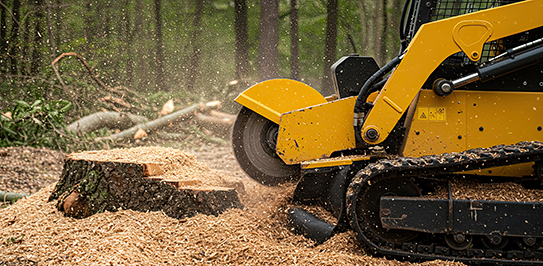
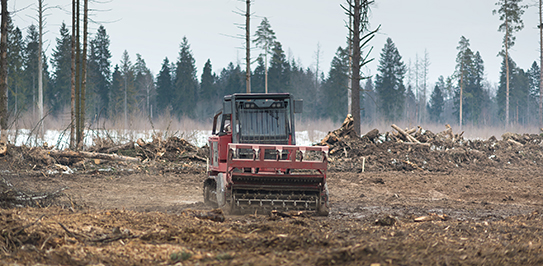
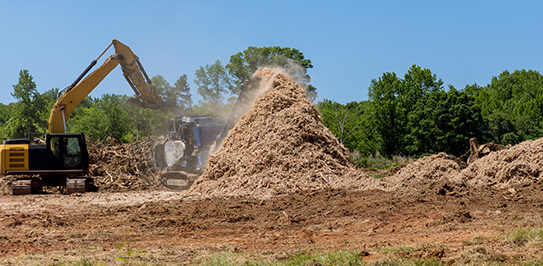
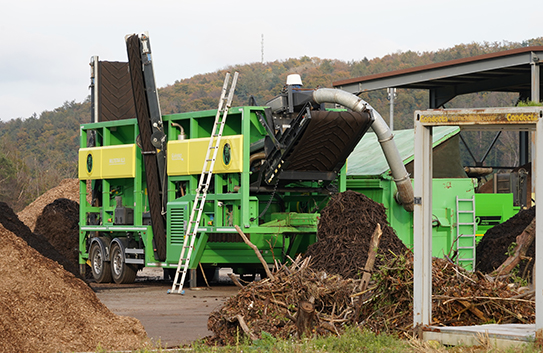
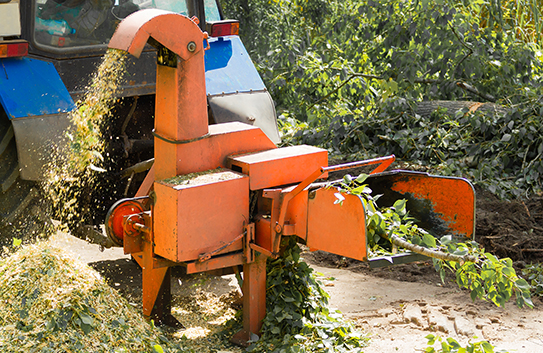
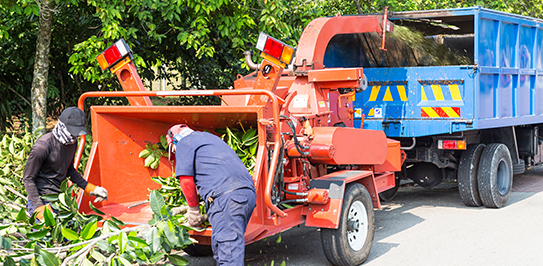
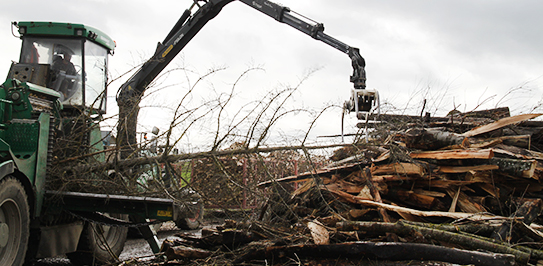
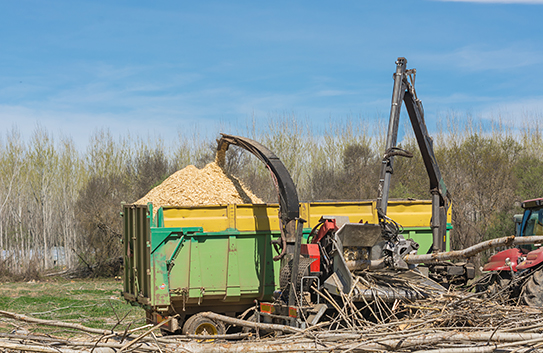
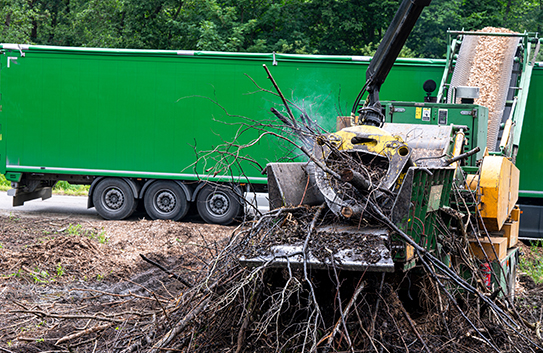
Forestry mulching offers a wide range of environmental, economic, and aesthetic benefits. Whether you’re managing private woodlots, maintaining utility corridors, or preparing land for development, the advantages are significant:
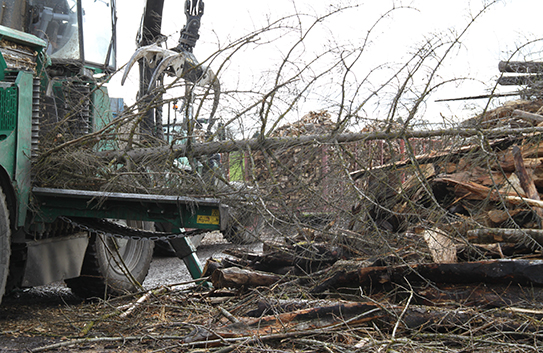
Not every job calls for mulching. If you need full root ball extraction for a foundation pour, or your municipality requires debris removal before permit sign-off, traditional clearing may be the right call. We’ll tell you which method makes sense before we quote. That’s the difference between a contractor and an arborist.
| Feature | Forestry Mulching | Traditional Land Clearing |
| Process | Single-step grinding and clearing | Multi-step (cutting, hauling, burning) |
| Soil Impact | Preserves topsoil and root systems | Often causes soil disturbance and compaction |
| Cleanup Required | Minimal - mulch remains on-site | Extensive debris removal required |
| Cost Efficiency | Lower overall cost due to fewer steps | Higher costs from labour and equipment |
| Speed | Faster project completion | Slower due to multiple stages |
| Environmental Impact | Eco-friendly, reduces erosion | Higher environmental disruption |
| Equipment Used | Single machine (tree mulcher service) | Multiple machines (excavators, trucks) |
| Best For | Residential, commercial, and rural land clearing | Large-scale clearing requiring full removal |
Our recommendation: If your goal is speed, soil health, and cost control, mulching wins almost every time. If you need complete root removal or your project has specific debris-free requirements, we’ll say so upfront.
Not Sure Which Method You Need? Let’s Talk.